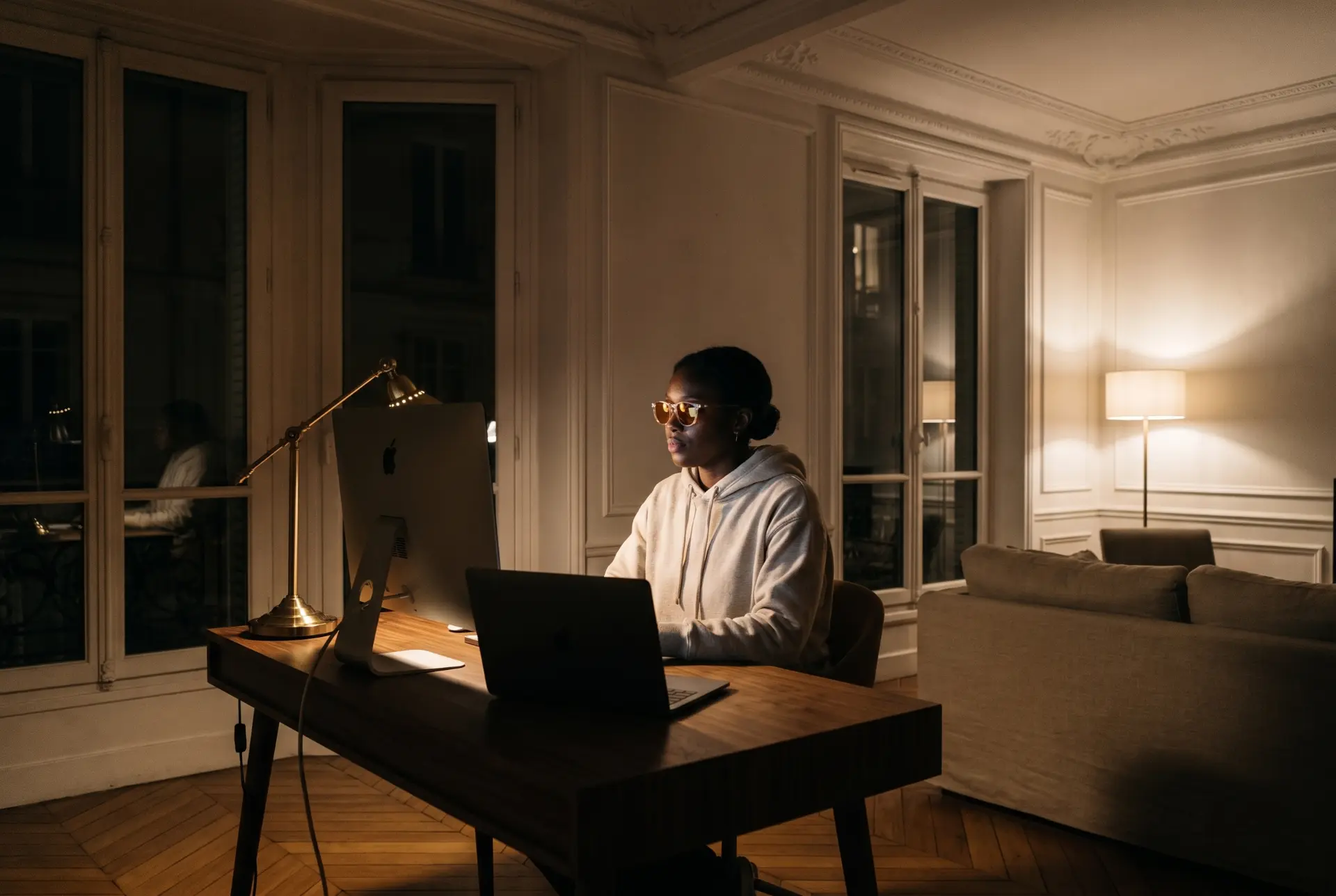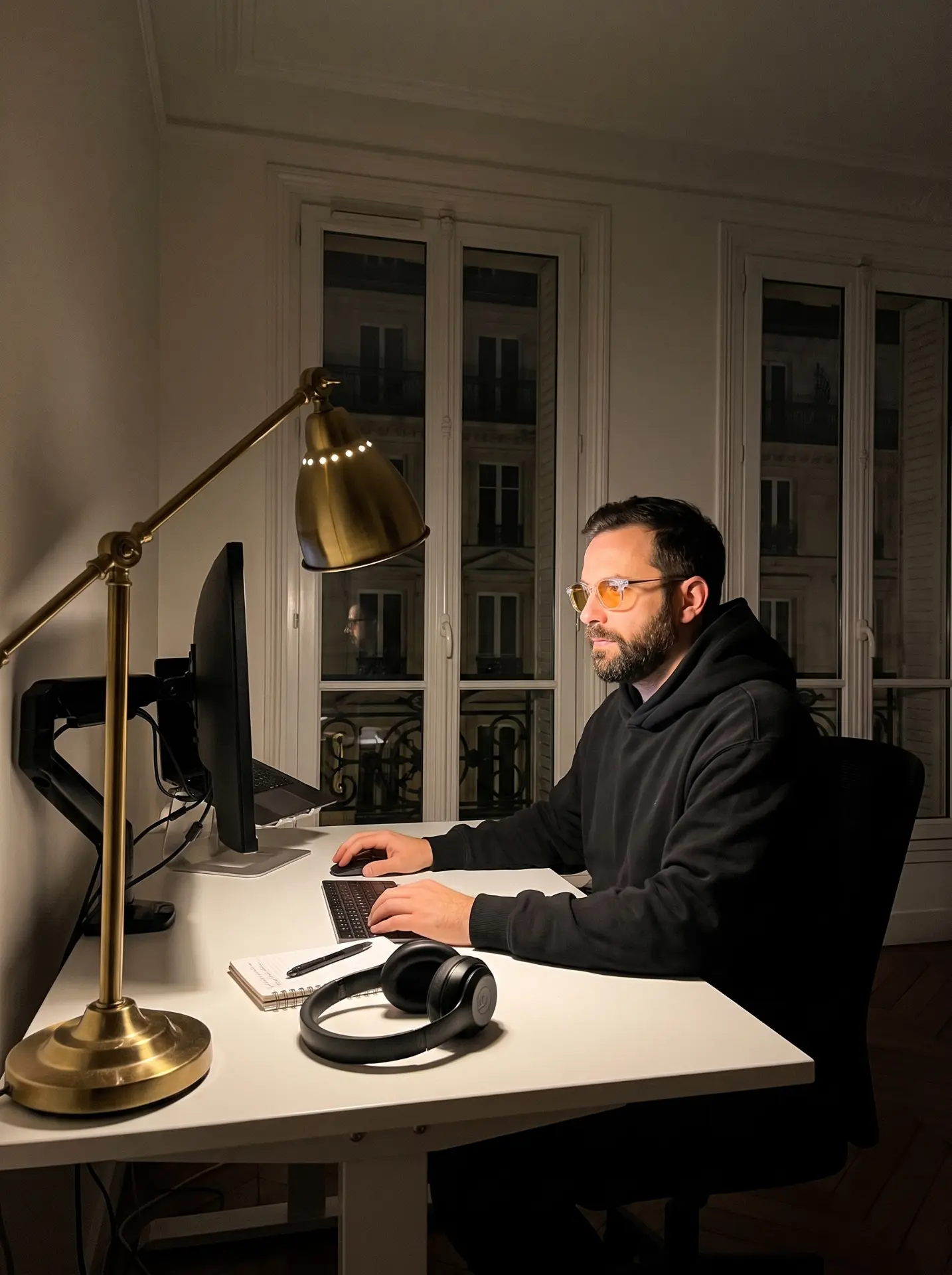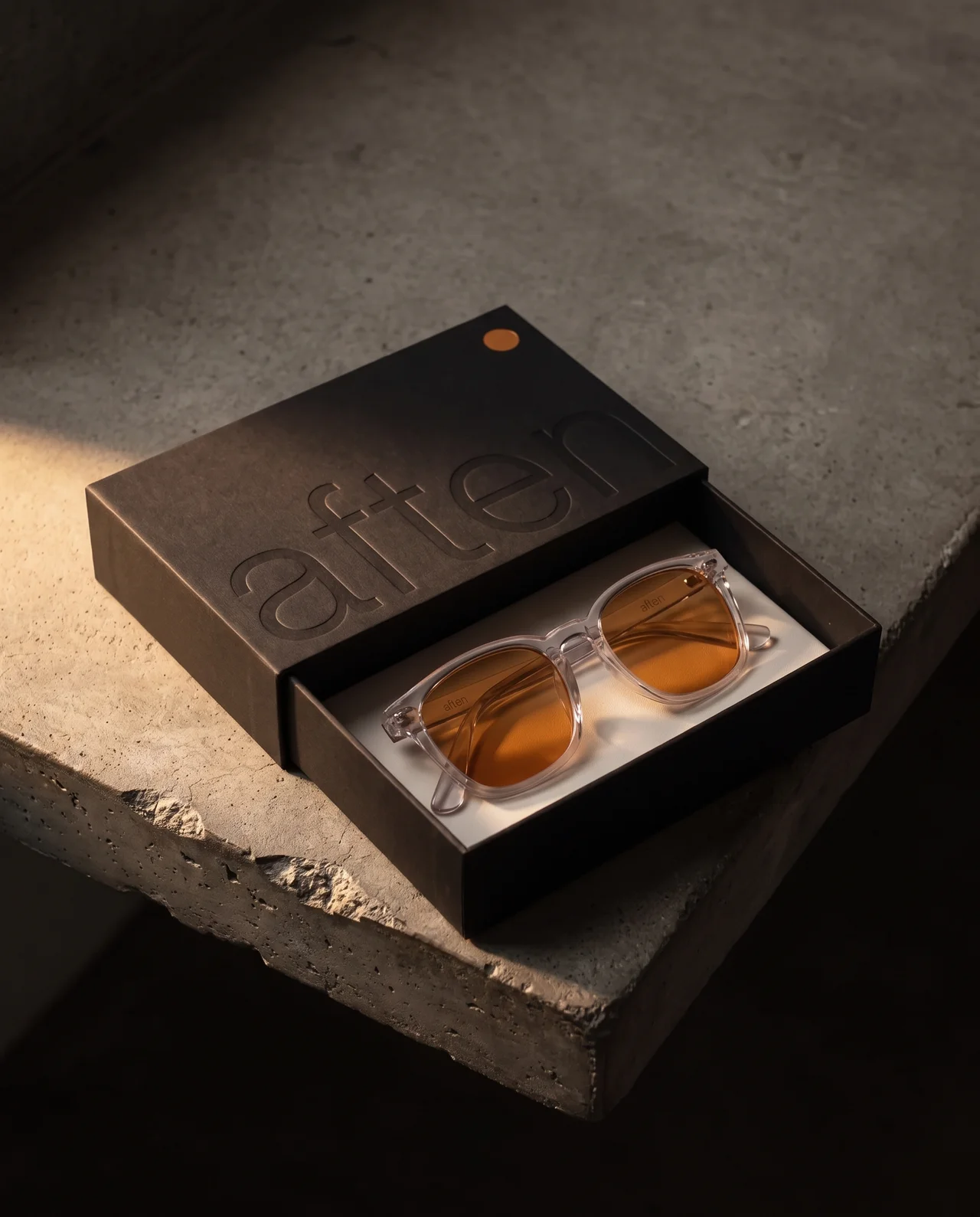
01 — The room
After
daylight.
Amber glasses for after sunset. They take the cool blue light out of your screens and lamps, so your evening stops looking like midday.
Screens are tuned for noon. The evening is not.
Two pairs · $149
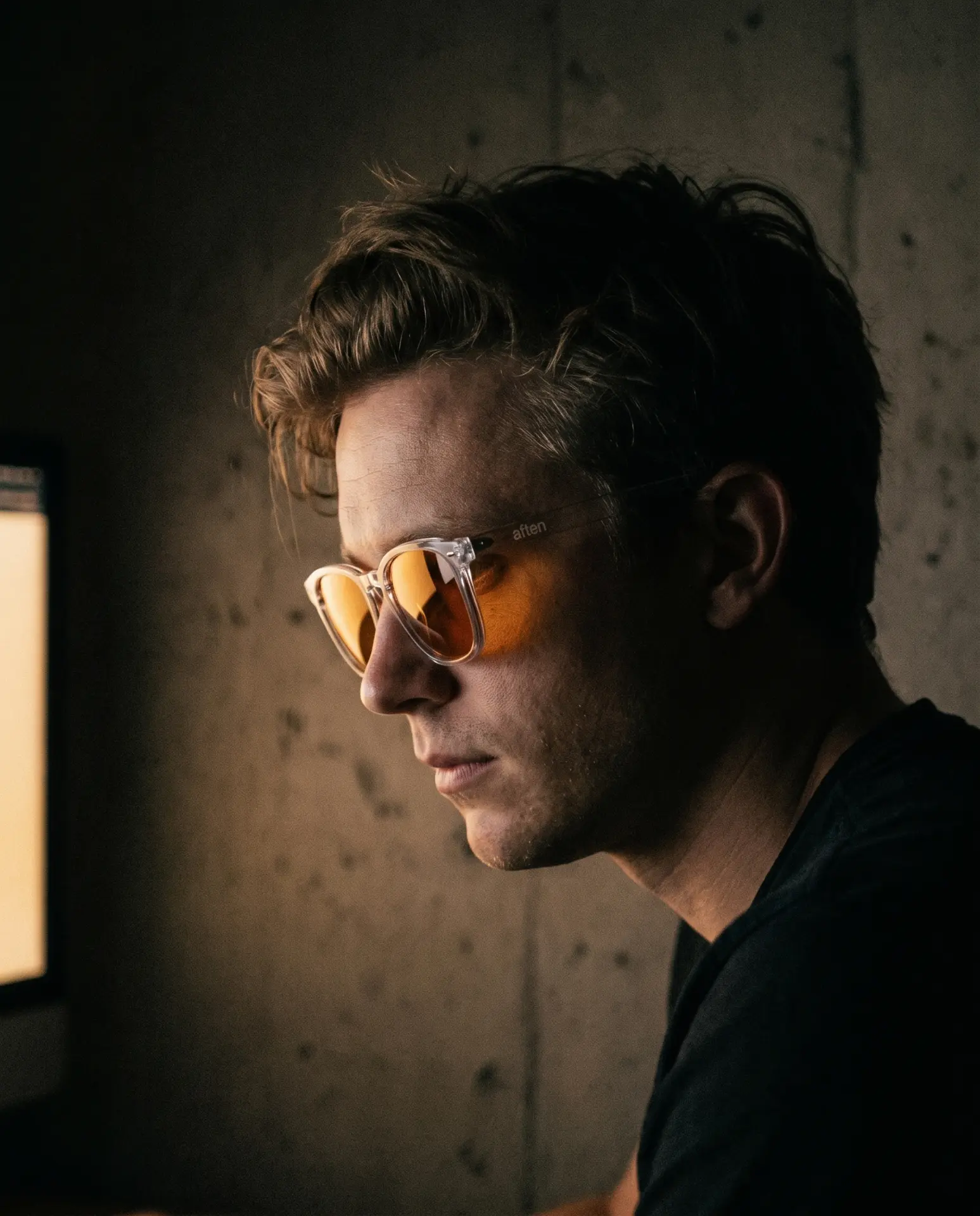
02 — When you wear them
Your day gets darker. Your room does not.
Follow one evening from left to right.
- 08:00
Daylight
Bright, cool light. Exactly what you want.
- 17:30
Sun drops
The sky warms and dims on its own.
- 19:30
Lamps and screens take over
Your room goes back to midday light.
- 20:00
Glasses on
Evening light, restored.
- 23:00
Lights out
Take them off and sleep.
03 — What the lens does
Cool light out. Warm light in.
Cool blue light — the kind screens, ceiling LEDs and phone displays push out after dark. Almost none of it reaches your eyes.
Warm light — lamps, candles, faces, wood, skin tones. It passes through, so the room still looks like a room.
- < 1 %
passes below 450 nm
The deepest blue — the part screens and LEDs push hardest.
- ≈ 480 nm
cut-off
Where the lens stops blocking and starts letting light through.
- ~ 62 %
visible light
The room stays bright enough to read, cook and work in.
The research
1.5 h late
That is how much later the body clock can run after an evening of bright screens. Less cool light in the evening, less delay.
Clear lenses do not get near those numbers. That is why this lens is amber.
Sources
- Chang et al., PNAS 2015
- Thapan et al., 2001
- Brainard et al., 2001
Laboratory conditions.
04 — Why not the cheap ones
Most blue-light glasses are clear for a reason.
A clear lens can barely remove blue light without changing colour. Ours changes colour, and publishes what it removes.
Typical blue-light glasses
AFTEN One
Blue light actually blocked
A few percent. Mostly marketing.
Nearly all of it below 450 nm.
Lens colour
Clear — looks the same, does little after dark.
Amber — you can see it working.
Made for
All-day, general use.
The hours after sunset.
Transmission data published
Rarely, if ever.
Yes. The full curve is on this page.
Blue light actually blocked
A few percent. Mostly marketing.
Nearly all of it below 450 nm.
Lens colour
Clear — looks the same, does little after dark.
Amber — you can see it working.
Made for
All-day, general use.
The hours after sunset.
Transmission data published
Rarely, if ever.
Yes. The full curve is on this page.
05 — How to use them
Three steps, then forget them.
01
Put them on after sunset
Around the time you switch the lamps on.
02
Change nothing else
Keep your screens, lamps and habits as they are.
03
Take them off for bed
They belong on the nightstand, not on your face.
06 — Worn
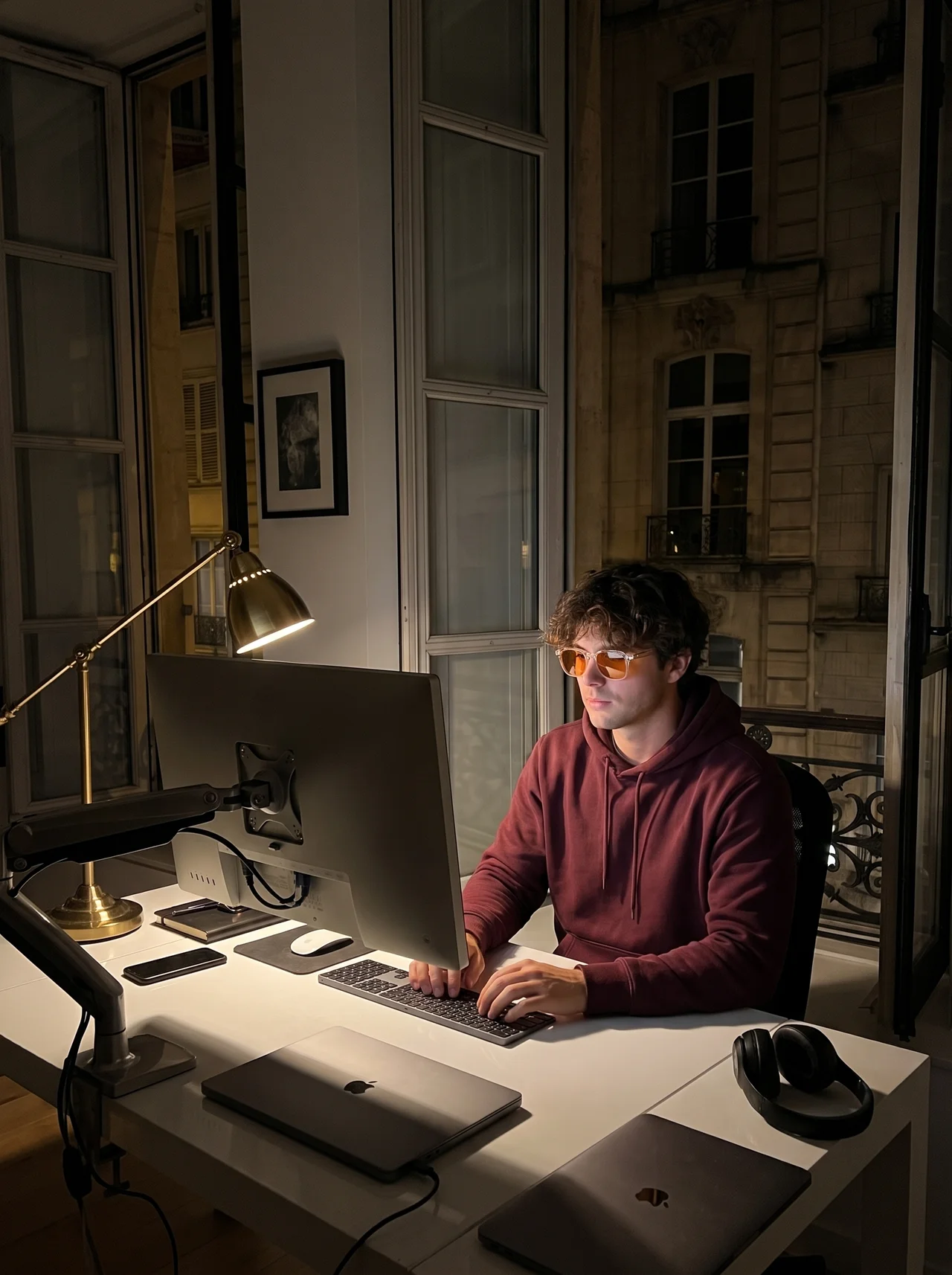
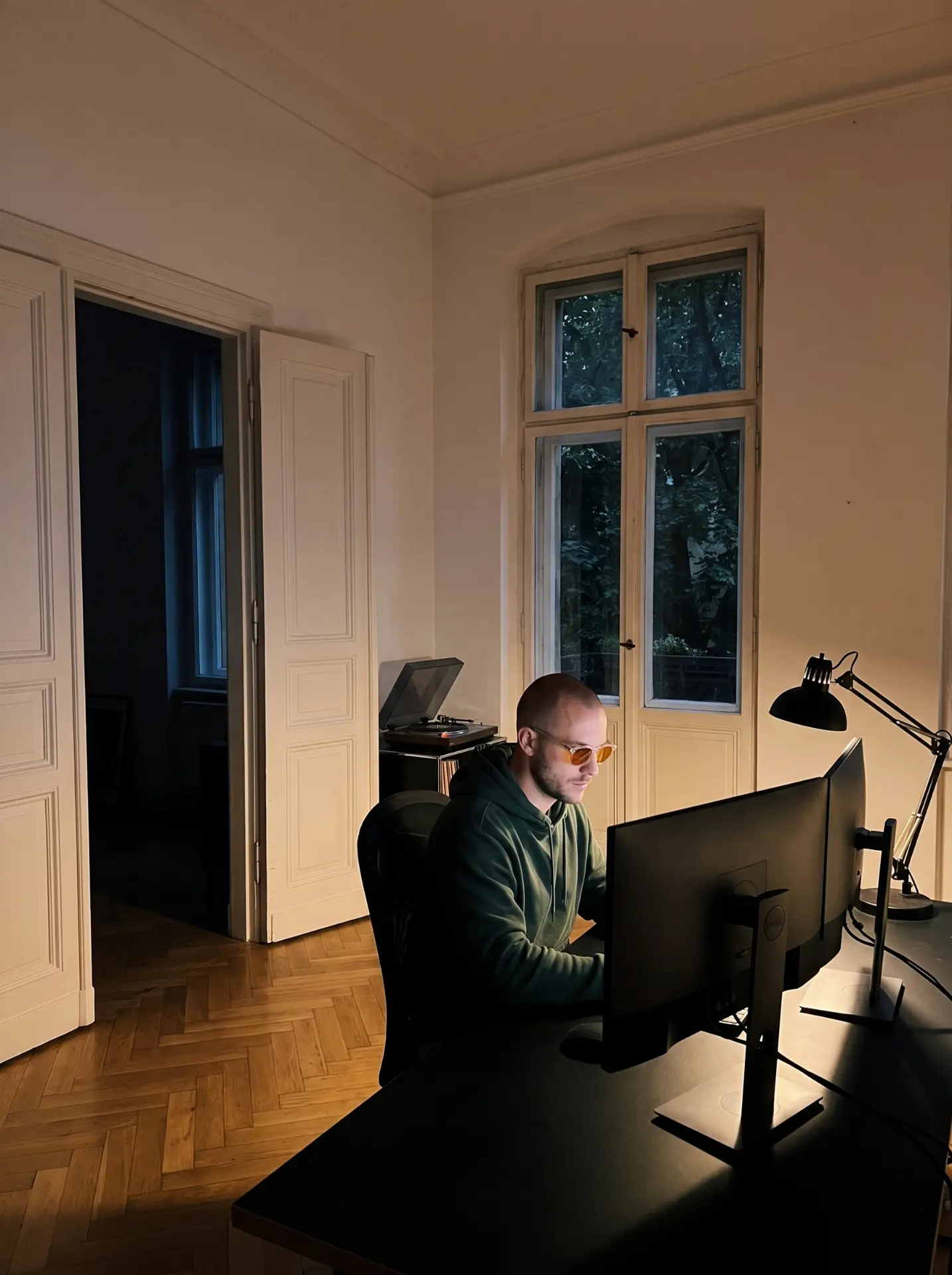
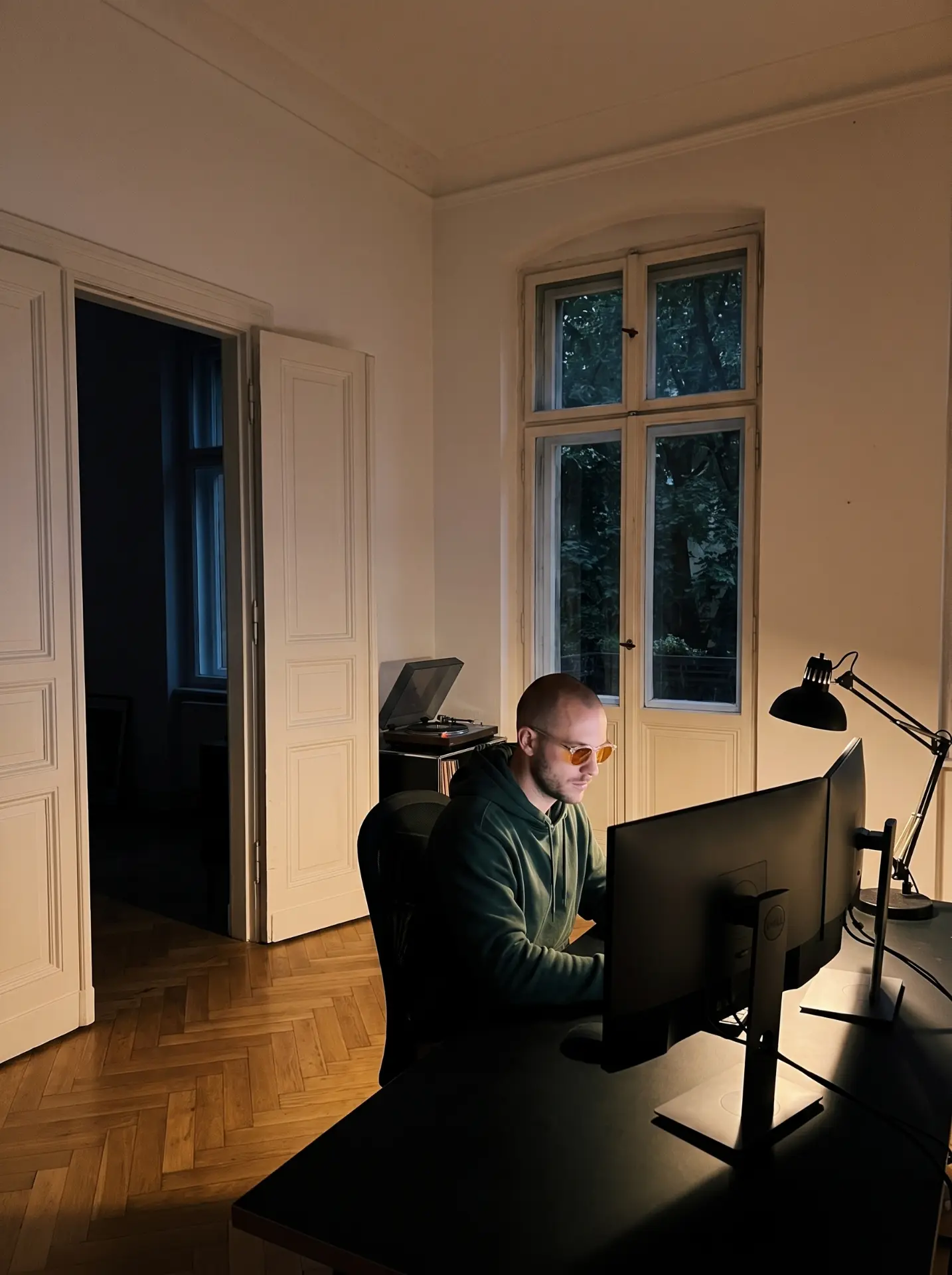
The room does not get darker. It gets warmer.
Photographed at the hours the glasses were drawn for — screens still on, ceiling lights off, the day already over.
What people say
Worn after sunset, most nights.
“The first evening I wore them my screen stopped feeling like a floodlight. I kept working, it just looked calmer.”
Mara K.
“I put them on when the lamps go on. Nothing else about my night changed, which is exactly what I wanted.”
Sam O.
“Light frame, no pressure behind the ears, and the amber is warm instead of orange-cartoon.”
Iris D.
- Delivery
- US delivery in 4–7 business days
- Returns
- 30 days, unworn, in the original box
- Checkout
- Secure, encrypted payment
- Questions
- hello@wearaften.com
07 — Journal
All entries →